



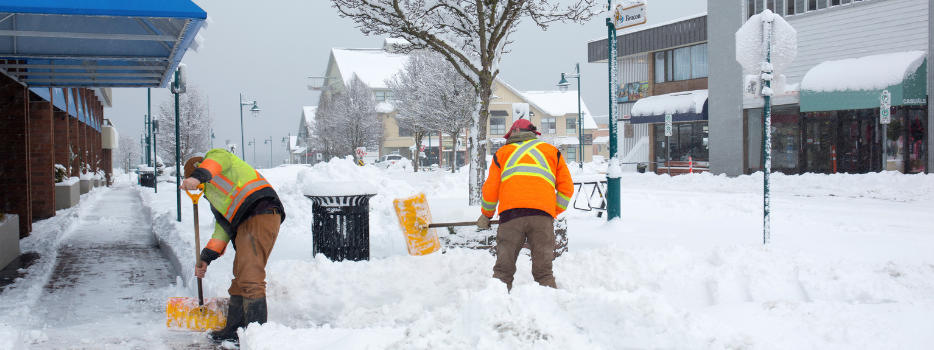
As winter approaches, outdoor workers and facility managers encounter various seasonal hazards, including cold stress and slip-and-fall incidents. Recognizing these risks and implementing preventive measures is important to protect employees and visitors during the winter season.
Cold stress and health risks
Outdoor workers are exposed to many physical risks depending on their responsibilities, the season, and how long they’re outside. In winter, extreme cold and wet conditions can present serious health risks. The body works harder to maintain its temperature in cold environments, and heat leaves the body more rapidly when temperatures drop and wind speeds increase.
Cold stress occurs when the body’s skin and core temperatures fall, potentially leading to serious health problems. Common cold-induced illnesses and injuries include:
- Hypothermia: Occurs when the body uses up its stored energy and can no longer produce heat, often after prolonged exposure to very cold temperatures.
- Frostbite: A freezing injury that causes loss of feeling and color in affected areas, typically the extremities.
- Trench Foot: Also called immersion foot, caused by prolonged exposure to wet and cold conditions. It can occur at temperatures as high as 60°F if feet remain wet.
- Chilblains: Painful inflammation of small blood vessels in the skin due to cold (but not freezing) air.
If a person’s temperature drops below 95°F, seek medical attention immediately.
Dressing warmly and staying dry
Proper clothing is essential for preventing cold stress. Recommended winter wear includes:
- A hat and scarf or knit mask to cover the face and mouth
- Sleeves that cinch at the wrist
- Mittens (warmer than gloves)
- Waterproof boots and coat
- Several layers of loose-fitting clothing:
- Inner layer: Wool, silk, or polypropylene to retain body heat
- Insulation layer: Wool, goose down, or fleece to trap air
- Outer layer: Tightly woven, water- and wind-resistant materials
Additional cold weather safety tips
- Monitor your physical condition and check on coworkers.
- Protect ears, face, hands, and feet; these areas are most susceptible to cold stress.
- Take breaks in warm locations and limit time outside when possible.
- Carry extra dry clothing (socks, mittens, hats, jackets, blankets).
- Include hot packs in your first aid kit.
- Avoid touching cold metal surfaces with bare skin.
Learn more from the Occupational Safety and Health Administration (OSHA) about cold stress symptoms and treatment.
Preventing winter slip and fall injuries
Winter weather also increases the risk of slip and fall injuries in parking lots, walkways, and entrances. These injuries, often involving the head or back, can be costly and slow to heal. West Bend sees a significant spike in slip and fall claims during the winter months.
To reduce these risks, organizations should focus on four key areas:
- Plan: Assess and prepare your winter safety strategy.
- Remove: Use traction aids and ice melt shaker jars to keep surfaces safe.
- Inspect: Track snow and ice removal using logs, understand ice melt types, and review snow/ice control contract language.
- Educate: Provide safety reminders and training to employees and patrons.
Preparation is critical. Before winter arrives:
- Line up a snow removal contractor.
- Train employees to document snow and ice removal efforts.
- Conduct a facility check for downspouts or overhangs that may cause hazards.
Explore West Bend’s winter slip and fall resources for tools and templates to support your efforts.