



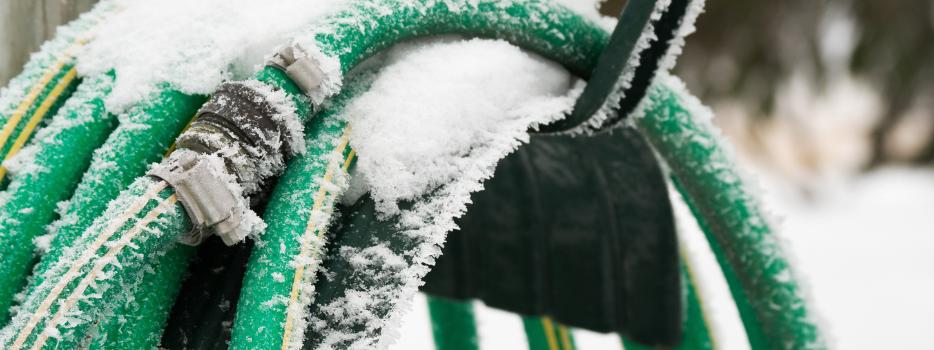
When the weather starts to cool down, it’s time to start preparing your home for winter. An important and often overlooked task is draining and disconnecting your hoses and winterizing your outdoor faucets, also known as hose bibs. Properly maintaining your exterior faucets can prevent them from freezing. Frozen water expands insides of pipes, and that expansion increases the risk of cracks that could potentially burst and leak inside your home.
How to winterize outdoor faucets and hoses
Choose a mild day before the first hard freeze to complete the following steps. If your home has several outdoor faucets, check each one individually because they may be connected to different shutoff valves.
- Inspect each exterior faucet, hose, and nearby connection for cracks, leaks, or other visible damage.
- Disconnect, drain, and properly store the hose inside your home or garage. Removing hoses prevents water from remaining inside outdoor faucets during freezing temperatures.
- Turn off the valve inside your house that supplies the outdoor faucet.
- Open the outdoor faucet to drain water from the faucet to the valve. If you have a newer outdoor faucet that’s frost-proof, this step may not be needed.
Additional ways to protect outdoor faucets
- Consider frost-free hose bibs: These low-maintenance fixtures are designed to reduce the risk of freezing and typically don’t require draining. Remember to disconnect and properly store the hose before cold weather arrives.
- Contact a plumbing professional when needed: If you’re unsure how to locate or operate the shutoff valve, contact a local plumbing contractor for help.
- Cover your exterior faucets: For added protection during periods of extreme cold, place an insulated cover over the outdoor faucet and make sure it fits securely against the exterior wall.
Reconnect hoses in spring
When warmer weather returns, inspect the faucet and hose before reconnecting them. Slowly reopen the interior shutoff valve, then check the indoor and outdoor connections for leaks while the water begins flowing. Replace damaged washers, hoses, or fittings before regular use, and avoid leaving a hose connected when freezing weather is still possible.
Before freezing temperatures arrive, take a few minutes to prepare your exterior faucets and hoses. Completing this simple maintenance before the first hard freeze can help protect your home from costly water damage.
Winterizing outdoor faucets FAQ
When should outdoor faucets be winterized?
Outdoor faucets and garden hoses should be winterized before the first hard freeze of the season. Choose a mild day to disconnect and drain hoses, shut off outdoor water supplies if applicable, and complete any additional protective measures before temperatures drop below freezing.
Can I leave a hose connected during winter?
It’s best to disconnect, drain, and store garden hoses indoors or in a garage before freezing weather arrives. Leaving a hose connected can allow water to remain in the faucet and increase the risk of freezing.
What happens if an outdoor faucet freezes?
A frozen outdoor faucet can damage the connected plumbing. In some cases, freezing may cause a pipe to crack or burst, potentially leading to leaks and water damage inside the home.