



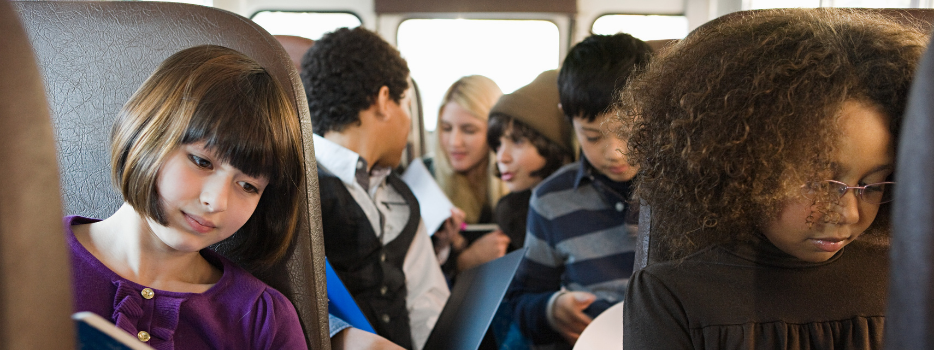
As back-to-school season begins, many children will once again spend part of their day riding school buses. In addition to transporting children to and from school, school buses are also used by youth programs, childcare centers, and YMCAs for field trips and other activities. School buses are an extremely safe mode of transportation for children. According to the National Highway Transportation Safety Board (NHTSA), children are safer in school buses than they are in cars. However, safe transportation involves more than getting children from one location to another. An important element of school bus safety is proper supervision, and organizations should have a clear plan for monitoring children before, during, and after each ride.
Why supervision matters on school buses
Without proper supervision, the school bus can become a place where bullying and peer abuse can occur. This risk can increase when the driver is the only adult on the bus or when staff members sit together at the front and become distracted by conversation, phones, or other responsibilities. The driver’s primary responsibility must be focusing on the road, so if other adults are not actively watching and listening, children may be largely unsupervised. Mixed-age groups, crowded seats, noise, and limited visibility can make it even harder to notice concerning behavior before it escalates.
A proactive supervision plan can help staff identify issues early, respond consistently, and create a safer, more respectful environment for every child on the bus. It also helps ensure staff know where to sit, what to watch for, how to communicate concerns, and what steps to take if a child reports or experiences unsafe behavior.
Strategies for managing student behavior on school buses
There are several practical steps staff can take to help keep children safe on school buses and reduce opportunities for bullying, inappropriate behavior, and horseplay.
- Spread out: Ensure staff are spaced throughout the bus rather than sitting together. If possible, place one adult near the front, one near the middle, and one near the back so staff can see and hear more of what is happening.
- Assign seats: Consider using assigned seats for all children, especially on longer rides or repeated routes. If staff need to watch some children more closely, seat them near an adult and avoid placing children with known conflicts next to each other.
- Separate age groups: Have younger children sit toward the front of the bus and older children sit toward the rear or create clearly defined seating zones by group. This can help reduce intimidation, rough play, or inappropriate interactions between children of different ages.
- Review appropriate bus behaviors: Discuss expectations with children before the trip begins. Remind them to stay seated, use respectful language, keep hands and belongings to themselves, follow staff instructions, and speak up if they see or experience unsafe behavior.
- Apply consequences consistently for misbehavior: Make sure children understand that bullying, harassment, and unsafe behavior on the bus will be addressed. Consequences should be communicated in advance, applied consistently, and documented when incidents occur.
Staff should also have a process for reporting concerns after each trip. Even small incidents, repeated teasing, or changes in a child’s behavior may point to a larger supervision issue. Clear documentation and communication with program leaders can help organizations respond quickly and prevent similar problems in the future.