


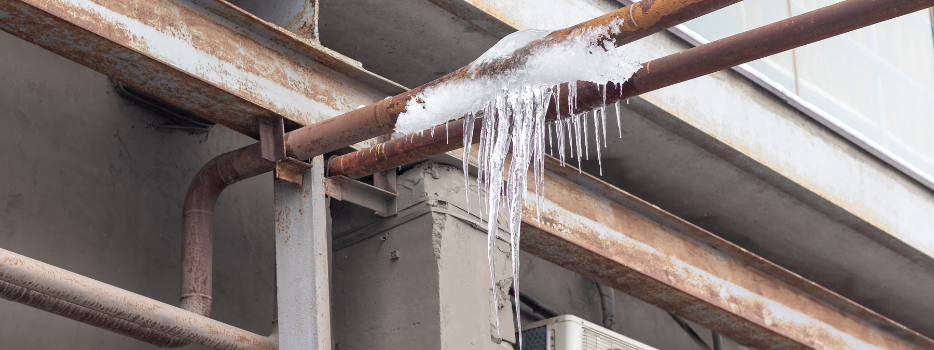
As winter temperatures drop and cold snaps become more common, protecting your home or business from the dangers of frozen water lines is critical. Even a brief period of extreme cold can lead to burst pipes, costly repairs, and significant water damage. By understanding where your property is most vulnerable and taking proactive steps, you can minimize risks and keep your water systems running smoothly all season long.
Domestic water lines
Water lines need 40 degrees of sustained temperature to prevent freezing. Which locations within your home or business may be affected by wind-induced low temperatures? Water lines in concealed spaces, outside walls, soffits, near overhead doors, or in the garage itself are most at risk. Check out the tips below to keep your pipes from freezing.
- Moving water is resistant to freezing. During these cold snaps, let both hot and cold water run/trickle. Although water utility bills are not cheap, they still cost less than repairing damage caused by freezing or pipe bursts.
- Add pipe insulation on exposed water lines.
- Add heat tape to water lines in vulnerable areas. Ensure the heat tape used is a quality product, undamaged, and free of kinks and nicks that expose conductors. Always follow manufacturer's installation instructions!
- There are many leak detection AI devices on the market that notify you of a leak. These will assist in minimizing the post freeze damage but are not prevention devices.
- Thawing: Once the cold snap has passed, stay vigilant. Thawing pipes and ice expansion are also a problem. Run water throughout the water system to ensure that there are no hidden freeze ups and ice plugs throughout your domestic water systems.
Sprinkler systems
Wet pipe sprinkler systems must have 40 degrees of sustained temperature to prevent freezing. Below are areas that are vulnerable to freezing or breaks, with the most vulnerable areas in bold.
- Office area vestibules and building entryways: Ensure that these areas are adequately heated. Small heaters in these areas often cannot keep up during extreme cold. Monitor the temperature in these areas and leave interior doors open allowing heat from larger rooms to enter these spaces. Consider removing ceiling tiles around concealed spaces to allow heated room air to enter the space and use a fan to push warm air into the area.
- Sprinkler lines around overhead garage doors: Add pipe insulation or heat tape on vulnerable sprinkler lines around these doors if conditions warrant. Always follow manufacturer's installation instructions!
- Unoccupied buildings or spaces: Turn up the heat during this time. Utility bills are less costly than damages from a freeze or break. Monitor building temperature in unoccupied buildings or spaces with temperature sensors that provide notifications when temperature drop below 40 degrees.
- Dry pipe sprinklers, low point drains or drum drip traps: These MUST BE DRAINED prior to and during these cold snaps. During winter months, these devices should be drained weekly for best protection, however, during a cold snap they MUST be drained and monitored.
Sprinkler systems should be monitored by a central station. Water flow alarms are essential for promptly alerting emergency responders and building owners to any water movement within the system. Timely notification is crucial for minimizing costs associated with freezing or system breaches. As sprinkler systems can discharge hundreds of gallons of water per minute, shutting off the water quickly during a break is crucial.
Read more about preventing frozen sprinkler pipes in this Safety Summary.
Thawing
If you notice frost on sprinkler piping, contact your sprinkler contractor immediately! This could be an indication of an ice plug in the sprinkler pipe. This condition can only be resolved by a trained and qualified sprinkler contractor.