



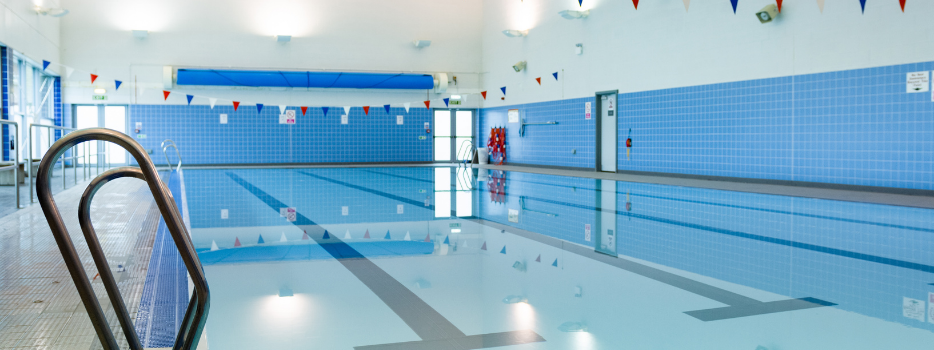
At YMCAs and other aquatics facilities, frightening near-drowning incidents happen too often. These incidents can result in serious injury, and many times the victims are children. A child who can’t swim wanders into the deep end during a pool party. A child who should be wearing a lifejacket takes it off and no one notices. A child who can’t swim tells her parents she will be in another area of the YMCA but instead decides to go swimming with her friend. These dangerous scenarios are more common than many people realize. While lifeguards play a critical role, prevention starts with knowing which swimmers are prepared for deep water.
Swim Testing: A key safety control
In many incidents, adults do not realize that a child cannot swim or overestimate the child’s ability. A consistent swim testing policy helps close this gap by clearly identifying which swimmers are ready for deep water. Our detailed recommendations are available in our Aquatics Best Practice Guide.
Recommended policy
-
Who to test: All swimmers under age 18 who want to use the deep end.
-
How often: Ideally, test swimmers each time they come to swim.
-
Why it matters: While frequent testing can feel daunting, a well-designed system makes the pool significantly safer.
Implementation and enforcement
-
Use visible identifiers: Many organizations issue color-coded wristbands to indicate who is allowed in the deep end, making it easy for lifeguards to spot swimmers in the wrong area.
-
Keep lifeguards focused on surveillance: When possible, avoid having lifeguards administer swim tests, especially when guarding alone.
-
Train additional staff: A different aquatics or administrative employee can be trained to run the test so lifeguards can keep full attention on the pool.
Minimum test standards
Swim test formats vary (e.g., Red Cross, Aquatics International), and different variations may be appropriate for your facility. At a minimum, the test should confirm that the swimmer can:
-
Swim at least 50 meters using an acceptable crawl stroke.
-
Tread water for 2 minutes immediately afterward.
-
Demonstrate comfort and control in deep water. The test should be rigorous enough that a non-swimmer would not be able to pass.
It’s challenging to implement a strong swim testing program; however, it shouldn’t take a tragedy for organizations to realize what must be done. If there’s a drowning, the damage to an organization’s reputation in the community is serious. And what’s much worse, a life is lost. Swim testing all swimmers under age 18 can go a long way to minimize this risk and save lives.